Description
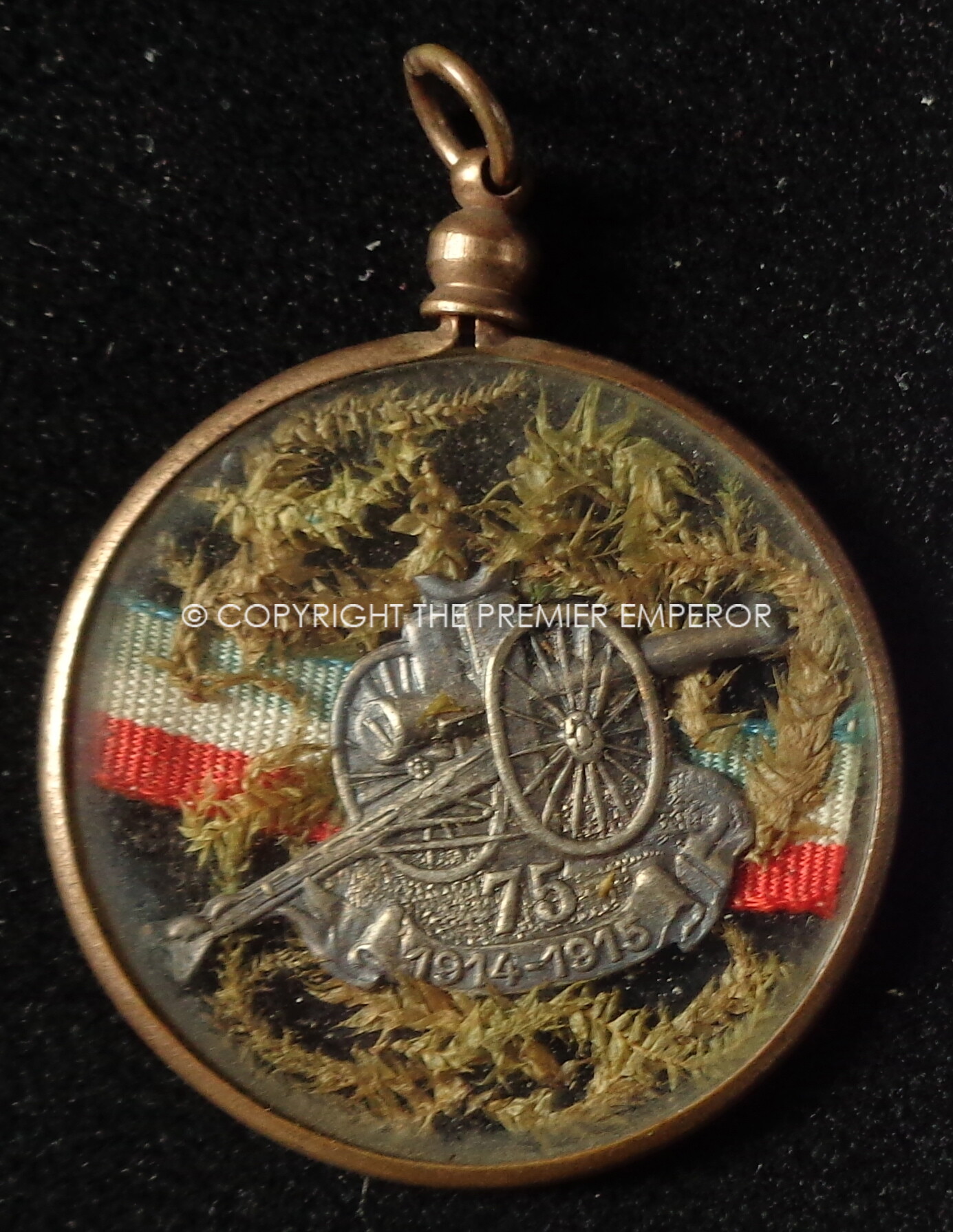
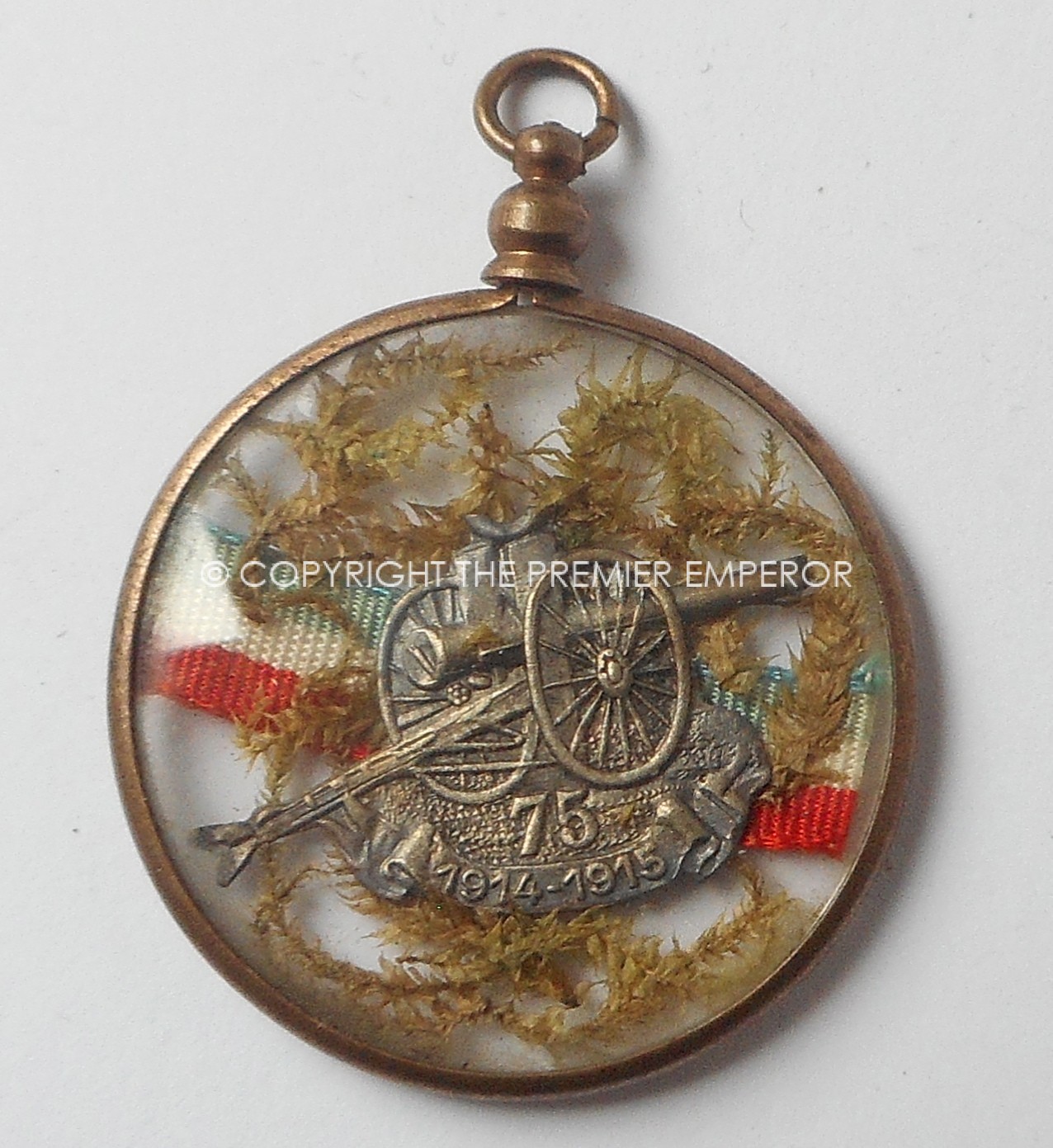
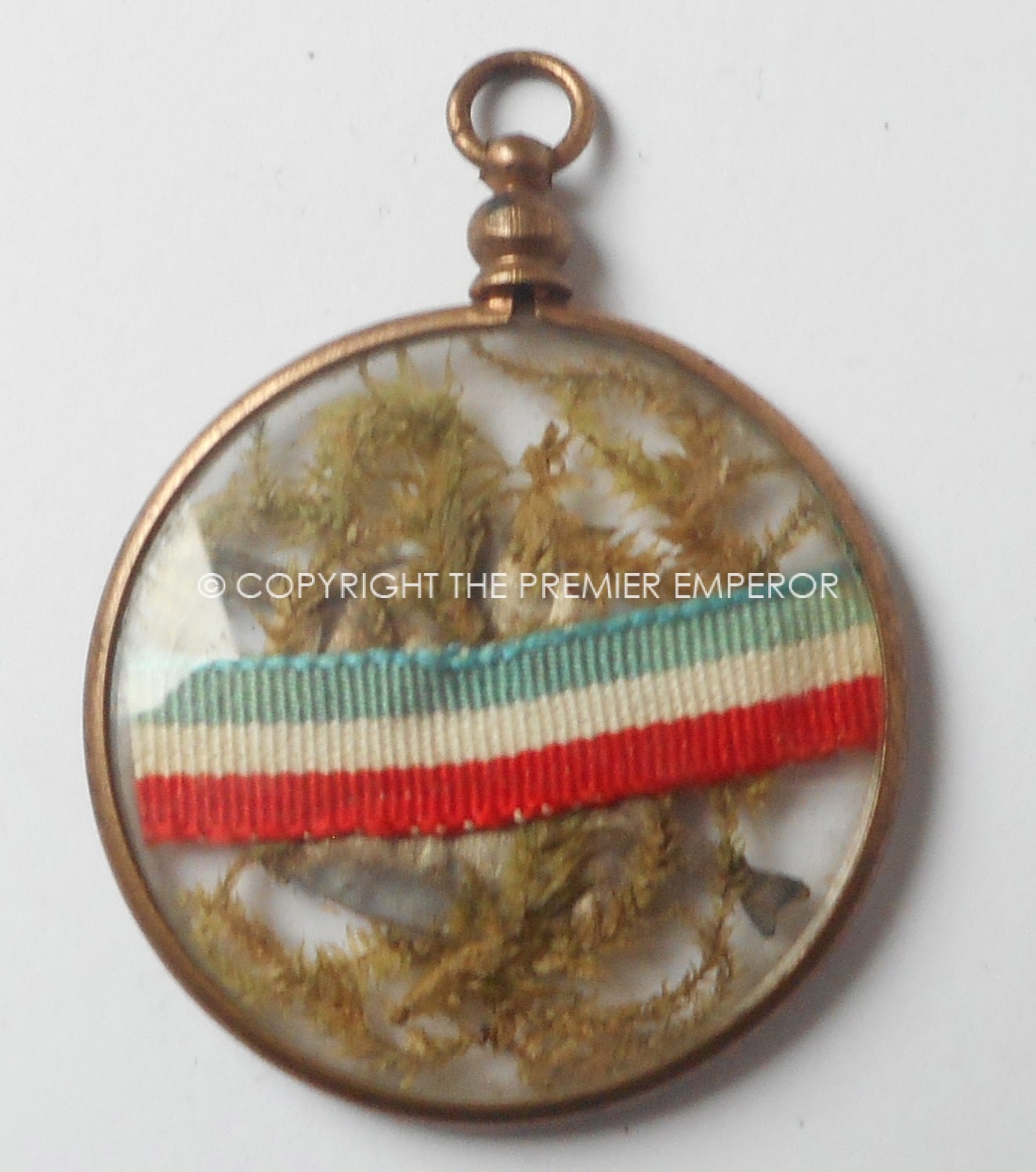
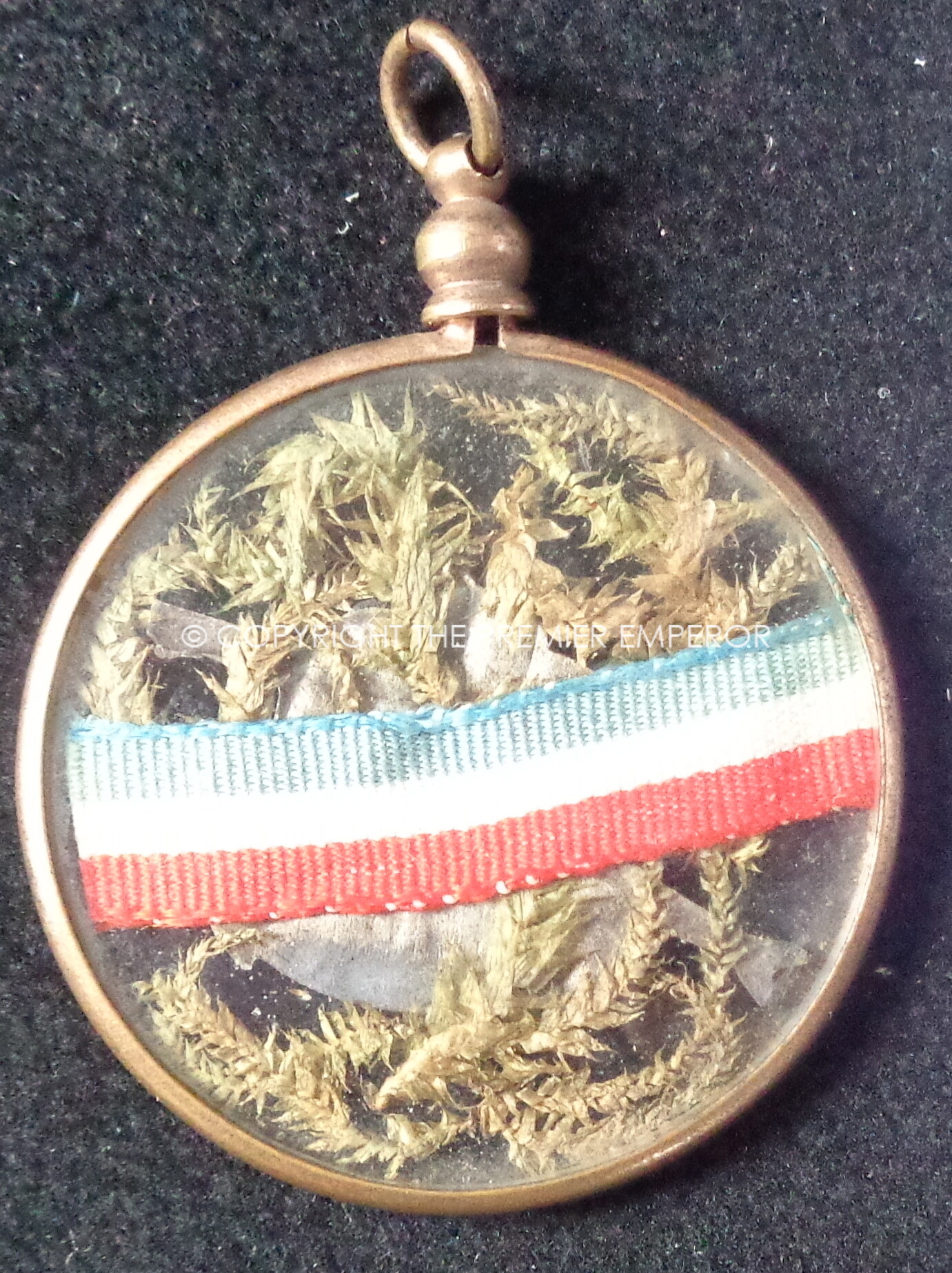
France. First War 1914-15 Commemoration fob/medallion for the Canon de 75 model 1897.
A superb, beautiful small brass rimmed glass fob/case housing a miniature Canon de 75 Modele 1897 with the number 75 below and a scroll with the dates 1914-1915. resting upon some green fern from the Verdun region of France and a small piece of Tri-colour,blue , white and red ribbon. A superb piece of Great War commemorative for this very famous Artillery weapon produced by the French and used for many years and by many other Nations. Size approx.2″ dia.
**IMPORTANT
Post & Packaging Worldwide is FREE
Brief History:-
The French 75 mm field gun was a quick firing artillery piece adopted in March 1898. Its official French designation was: Matériel de 75mm Mle 1897. It was commonly known as the French 75, simply the 75 and Soixante-Quinze (French for 75, literally “sixty-fifteen”). Initially, the French 75 had been designed as an anti-personnel weapon system for delivering large volumes of time-fused shrapnel shells on enemy troops advancing in the open. After 1915 and the onset of trench warfare, other types of battlefield missions demanding impact-detonated high-explosive shells prevailed. By 1918 the 75s became the main agents of delivery for toxic gas shells. The 75s also became widely used as truck mounted anti-aircraft artillery. They were also the main armament of the Saint Chamond tank in 1918.
The French 75 is widely regarded as the first modern artillery piece. It was the first field gun to include a hydro-pneumatic recoil mechanism, which kept the gun’s trail and wheels perfectly still during the firing sequence. Since it did not need to be re-aimed after each shot, the crew could fire as soon as the barrel returned to its resting position. In typical use, the French 75 could deliver fifteen rounds per minute on its target, either shrapnel or melinite high explosive, up to about 5 miles (8,500 m) away. Its firing rate could even reach close to 30 rounds per minute, albeit only for a very short time and with a highly experienced crew.
At the opening of World War I, in 1914, the French Army had about 4,000 of these field guns in service. By the end of the war about 12,000 had been produced. It was also in service with the American Expeditionary Forces (AEF), which had been supplied with about 2,000 French 75 field guns. Several thousand were still in use in the French Army at the opening of World War Two, updated with new wheels and tires to allow towing by trucks rather than by horses. The French 75 set the pattern for almost all early-20th century field pieces, with guns of mostly 75 mm forming the basis of many field artillery units into the early stages of World War II.